
Gastroparesis: 10 Common Questions
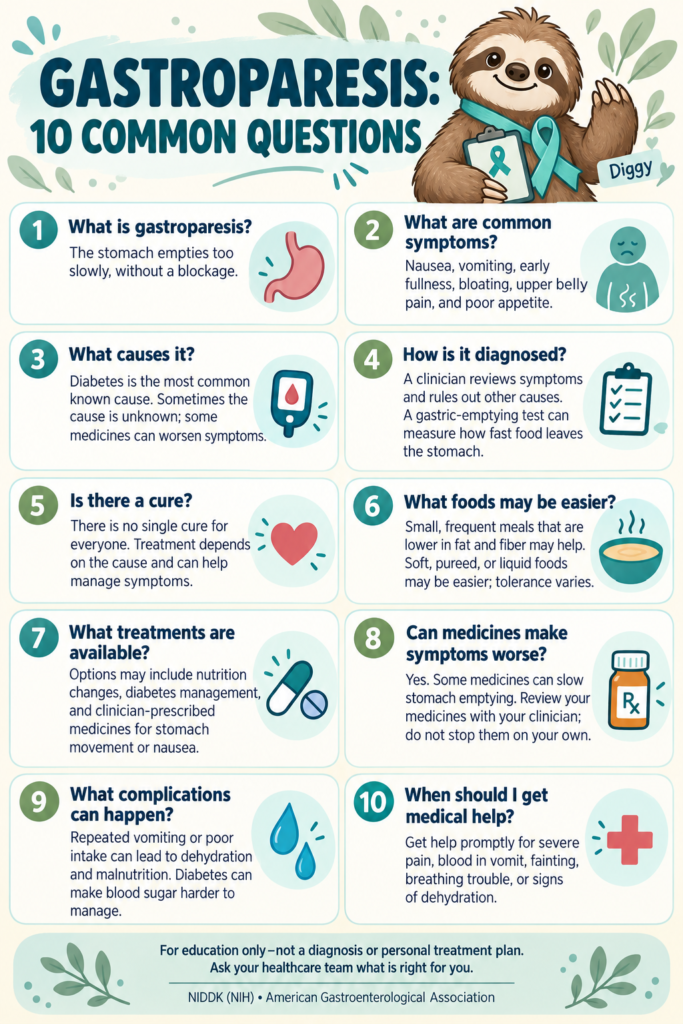
Diggy is here with clear, plain-language answers to 10 common questions about gastroparesis.
1. What is gastroparesis?
The stomach empties too slowly, without a blockage.
2. What are common symptoms?
Nausea, vomiting, early fullness, bloating, upper belly pain, and poor appetite.
3. What causes it?
Diabetes is the most common known cause. Sometimes the cause is unknown; some medicines can worsen symptoms.
4. How is it diagnosed?
A clinician reviews symptoms and rules out other causes. A gastric-emptying test can measure how fast food leaves the stomach.
5. Is there a cure?
There is no single cure for everyone. Treatment depends on the cause and can help manage symptoms.
6. What foods may be easier?
Small, frequent meals that are lower in fat and fiber may help. Soft, pureed, or liquid foods may be easier; tolerance varies.
7. What treatments are available?
Options may include nutrition changes, diabetes management, and clinician-prescribed medicines for stomach movement or nausea.
8. Can medicines make symptoms worse?
Yes. Some medicines can slow stomach emptying. Review your medicines with your clinician; do not stop them on your own.
9. What complications can happen?
Repeated vomiting or poor intake can lead to dehydration and malnutrition. Diabetes can make blood sugar harder to manage.
10. When should I get medical help?
Get help promptly for severe pain, blood in vomit, fainting, breathing trouble, or signs of dehydration.
For education only — not a diagnosis or personal treatment plan. Ask your healthcare team what is right for you.
Sources: NIDDK (NIH) • American Gastroenterological Association
#Gastroparesis #GastroparesisAwareness #GSSI #GastroparesisSupport #ChronicIllness #InvisibleIllness