GLP-1 Lawsuits and Gastroparesis: What the 4,025 Cases Do — and Don’t — Mean
If you take, or have taken, a GLP-1 medicine — the class that includes Ozempic — you may have seen headlines about lawsuits linking these drugs to gastroparesis. Here is what is actually happening in court, in plain terms, and what it does not yet prove.
First, a quick definition. Gastroparesis, also called delayed gastric emptying, is a disorder that slows or stops the movement of food from the stomach to the small intestine, without a mechanical blockage. Symptoms can include feeling full early, staying full long after a meal, nausea, vomiting, bloating, and upper abdominal pain. It is not the same as ordinary nausea, and it has many possible causes — including diabetes itself.
What is MDL 3094?
MDL 3094 is a federal multidistrict litigation in the Eastern District of Pennsylvania, before Judge Karen S. Marston. It was created in February 2024 to coordinate pretrial proceedings for similar gastrointestinal-injury claims about GLP-1 medicines. An MDL is a way to handle many similar cases together before trial — it is not a single lawsuit, and it is not a court finding that a drug caused anyone’s condition.
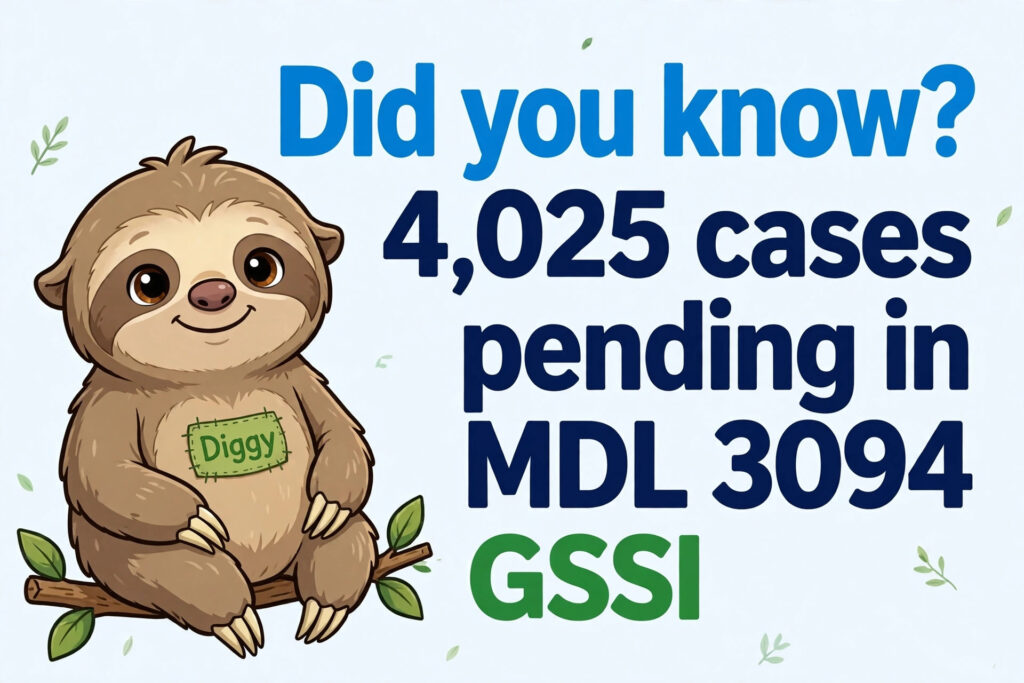
As of October 1, 2026, the Judicial Panel on Multidistrict Litigation reported 4,025 actions pending in MDL 3094, with 4,139 historical actions in total. The court description of the centralized cases specifically names Ozempic, Wegovy, and Rybelsus (semaglutide, Novo Nordisk), Mounjaro (tirzepatide, Eli Lilly), and Trulicity (dulaglutide, Eli Lilly). The exact product should always be checked against pharmacy records, not assumed from the drug class alone.
What do the lawsuits allege?
In general, the plaintiffs allege that the manufacturers knew, or should have known, that certain GLP-1 medicines could cause gastroparesis and other serious gastrointestinal injuries, and that warnings to patients and prescribers — or safety representations about those risks — were inadequate during the relevant periods.
What do the manufacturers say?
The Novo Nordisk defendants and Eli Lilly deny the allegations. Liability is disputed, and the manufacturers contest it. Medication use, diagnosis, timing, alternative causes, the warnings in effect at the time, causation, and damages remain case-specific questions. The existence of an MDL does not establish that a drug caused an individual patient’s condition, that a warning was legally inadequate in a particular case, or that any claimant is entitled to compensation.
What does the Ozempic label say?
Ozempic was approved by the FDA in 2017. Its prescribing information states that Ozempic delays gastric emptying, that it has been associated with gastrointestinal adverse reactions, sometimes severe, and that it is not recommended in patients with severe gastroparesis. An ileus warning was added in September 2023, and a warning for severe gastrointestinal adverse reactions was added in January 2025. Those label statements are important context, but by themselves they do not establish that a drug caused a particular person’s gastroparesis.
What has not happened
As of October 2026, no global settlement has been announced for MDL 3094, and there is no publicly established universal settlement amount or court-approved per-claim payout schedule. Published dollar figures should not be treated as an official average, an offer, or a guaranteed payout. Expert-evidence hearings under Rule 702 were scheduled for September 14–18, 2026; how the court rules on expert evidence may affect which opinions can be used on common issues.
A separate proceeding, MDL 3163, covers vision-loss claims involving non-arteritic anterior ischemic optic neuropathy (NAION). It had 247 actions pending as of October 1, 2026. Do not combine that count with MDL 3094 — they are different cases about different injuries.
What this means if you are a patient
Do not stop or change a prescribed GLP-1 medicine based on lawsuit news alone. Talk with the clinician who prescribed it, especially if you are experiencing severe gastrointestinal symptoms. Diabetes and other conditions can also cause gastroparesis, so symptoms need a clinician’s evaluation, not a headline’s.
If you are considering legal options, talk promptly with an attorney licensed in your state. There is no single nationwide filing deadline for these claims — product-liability deadlines vary by state, and when a period starts can depend on diagnosis, discovery, product use, and other facts. GSSI cannot advise you on whether you have a claim.
Why GSSI is sharing this
Many people in the gastroparesis community are asking about this news, and it is hard to tell the difference between a filed allegation, a label change, and a proven cause. GSSI shares general information so patients and caregivers can ask better questions of their own clinicians — and, where relevant, their own lawyers.
Gastroparesis Support Services, Inc. (GSSI) does not provide medical treatment or legal advice. When funding is available, GSSI provides non-medical support while you are being treated — including hotel stays, food and grocery cards, local rides, and gift bags.
What questions does this news raise for you? Share them in the comments, and we will keep an eye out for reliable updates.
Sources: DrugWatch, “Ozempic Lawsuit: October 2026 Blindness and Gastroparesis Claims” (October 2026); TortAdvisor, “Ozempic Lawsuit 2026 | MDL 3094 Gastroparesis Update,” citing the Judicial Panel on Multidistrict Litigation October 1, 2026 statistics report, FDA prescribing information, and the National Institute of Diabetes and Digestive and Kidney Diseases (NIDDK) definition of gastroparesis.
#Gastroparesis #GastroparesisAwareness #GSSI #Louisville #PatientSupport #CaregiverSupport #GLP1